3.25.2008

Only One More to Go... LupEnd


In homage to Lupe Fiasco's third and final album entitled LupEnd (which might have a 1984-esque theme)  due out late 2008, that will be the name of my last post. So now on to the post....
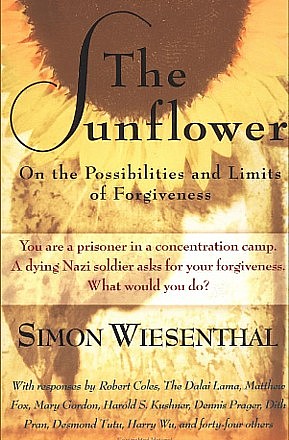
So the end of the marking period looms and this will be my last post regarding the books I have read throughout this past marking period. I enjoyed both Herland and The Sunflower, and would suggest them to people in need of an interesting read. While neither have you laughing out-loud or hanging on the edge of your seat, each book makes you think. Herland was quite farfetched and in no way do I see a nation of self-propagating  women coming to be in the near future - although there is a guy from Oregon who claims to be pregnant. On the other hand, The Sunflower is a true story, telling the tale of Simon Wiesenthal. One pattern I have noticed is that each book deals with different races and cultures. Now that it is senior year and next year we will all be moving on to different parts of the country, we will all experience and learn about different cultures. Growing up in Montvale or Woodcliff Lake has not allowed any of us to really experience culture for what it really is. While I did not read the other books, I know  Like Water for Chocolate and In the Time of the Butterflies each have a Hispanic theme. Are these books included in the senior library to prepare us better for all of our first years away from Bergen County? Well even if that wasn't the master plan of the administration, I think these books were a good choice for senior year. By reading about other cultures, especially those we are not so familiar with, it allows you to gain an appreciation  and respect for them. 
I only have one more project to go, or two if I'm feeling up to it. I am excited for fourth marking period where we will have more freedom, yes I said MORE freedom (believe it or not), but sad because it is the culmination of my four years at Hills. 

What to look forward to...
  1. Finishing project
  2. Random Blogs
  3. 4th Marking Period Project
  4. ...
  5. Graduation?

3.22.2008

Hip Hop Saved My Life

This is my favorite song on his second album, The Cool. Enjoy!

3.21.2008

Its Always Sunny In Nazi Europe.... excuse the reference


The Sunflower, what more is to be said about this book that has not already been stated in my previous two posts about it.... well for my sakes I hope I can come up with two more quality posts for all your enjoyment. While many see this book as to be a long, boring read. More than half of the book is reviews and reactions to the first ninety-eight or so pages of the novel. In particular there were a few entries that caught my eye.......
1) Harry James Cargas has the first entry that I had to reread. Professor Cargas raises the question, "Who am I to forgive" (Cargas 125)? He initially believes that forgiveness is the route to go, but when it comes down to such terrible events that "Hitler and his henchmen have committed", these events have gone too far (Cargas 125). When reading his response you can really feel how torn he is. Cargas, a Catholic, believes in G-d and G-d's belief of forgiveness. He ends this dilemma agreeing with Simon Wiesenthal's decision to not forgive the SS soldier and by asking G-d to have mercy on his soul.
2) The Dalai Lama also had a interesting point of view on the situation the book describes. He says that forgiveness is always important, but that does not mean that you have to necessarily forget a terrible event. He relates the Holocaust to the Chinese invasion of Tibet, where over 1,200,000 Tibetans died. Since the Buddhists believe in "nonviolence and compassion", it would be too easy for the Dalai Lama to just call the Chinese their enemy; he believes the same should be true for Simon Wiesenthal. Instead of condemning Karl Seidl and Germany Wiesenthal should have forgiven them.
3)Theodore M. Hesburgh is a reverend and former President of the University of Notre Dame. His response is quite lame and it seems that he is a pushover. As a priest, he says how it is his job to forgive those who have sinned. An example of this is the confessional. He "sits in a confessional for many hours and forgive(s) everyone who comes in" (Hesburgh 169). Hesburgh will always forgive no matter the situation. In my opinion I do not believe everythign he says. It is a bold statement for him to make, saying he will always be forgiving. There are certain situations, this being one of them, where forgiveness is not the way to go.
Well that wasthe last of my The Sunflower posts. Overall the book was okay, and made me think a lot about my heritage and how I would approach the situation Wiesenthal encountered.

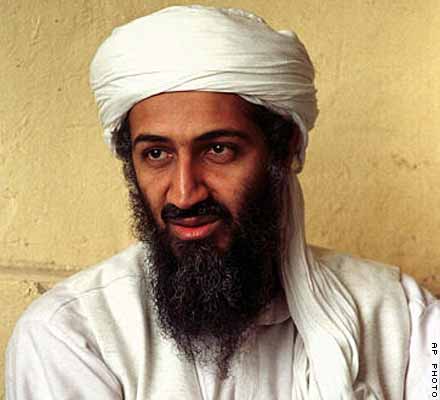
Would you be able to forgive this man?? Just because the Holocaust was decades ago, doesn't mean those responsible should be forgiven.

3.13.2008

Symply Amazing


After reading The Sunflower, I have gained an interest in the Holocaust. The harsh conditions that the victims had to live through are terrible, and cannot be fathomed. The second half of The Sunflower is made up of a symposium or a collection of reflections on the dilemma that the author of the book faces. For those who haven't read The Sunflower the conflict of the novel is about the soldier who wants forgiveness, from a Jew, for the actions he had done during the Holocaust. The second half of the novel is a Symposium. A Symposium is a collection of reflections. In this case, there are 53 entries from people about their opinions of how ethical they thought the situation was. The symposium is a very interesting part of the book as it gives many, a total of 53, point of views on the major issue.
On to my take......

STEVEN ANDREW COHAN
12th Grade Student


Dear Simon Wiesenthal,
Your last question posed to me, the reader, "What would I have done?" is very thought provoking (Wiesenthal 98). I could not imagine being put in the situation you were put in. I think I would have acted the same way you did. I would have sat in silence and made the dying SS soldier think long and hard about the question he had asked. As a young Jewish man, I am able to feel for you and our people. The Holocaust was terrible and to this day if the same question was asked, I would still hold a grudge. If I had the opportunity, I would have punched the dying soldier in his face; how dare he ask for forgiveness after being part of an organization that was responsible for the death of over six million Jews and up to twenty-one million people total? The Nazis involved in the Holocaust should never be forgiven for their terrible acts. I agree that forgiving is the right thing to do, but there is a point where forgiving in not always acceptable; this is one of those cases and I agree fully with how you handled it.

For more on The Sunflower, and about forgiveness on such a high level, check out this
article
by Kelly Sawyer. Her take on how far forgiveness can go is very interesting. It is tough to determine "the capacity to forgive someone of a crime as atrocious as genocide" but I think that there is no way forgiveness is possible when the crime is as bad as playing a role in the destruction of a human race.

Stats.

I Hate Stats.

3.09.2008

Flor del Sol


The second book on tap for me is The Sunflower. I feel that this book will be very different than Herland. First off, it is much more serious and a lot sadder than Herland. It also has a total of 53 responses or essays that give the reader another take on the novel. While reading The Sunflower, I often feel sad and sympathize for the author and protagonist, Simon Wiesenthal. The book details a Nazi soldier on his death bed, who asks a Jew for forgiveness before he passes. As a member of the Jewish faith, I thought about the possibility of this happening to me. I do not know how I would react to a person who would ask for forgiveness even though he believes that Jews are lesser people and are the root of all evil. I do not even know how Karl Seidl, the wounded Nazi soldier, mustered up the courage to ask the Jew, Simon Wiesenthal, for forgiveness. I don't even know what to compare this to; this would be like Osama Bin Laden asking an American for forgiveness for the 9/11 World Trade Center and Pentagon Terrorist Attacks, except worse. I could not fathom this happeneing. Although I am not overly religious, I feel that the Holocaust was one of the worst events to happen not only to the Jewish people, but for everyone who was in Germany during the 1930s and early 1940s. In my opinion there will be no genocides worse than the Holocaust. The main number that everyone hears is the six million Jews were executed in concentration camps, but there were over seventeen million total people who were killed under Adolf Hitler's regime. The Holocaust was a terrible event and it should always be remembered. The Holocaust was a terrible time, and living in one of the Ghetto Concentration Camps like Aushwitz, Birkenau, and in the case of Simon Wiesenthal the Lemberg Concentration Camp, is one of the worst fates one can imagine.
I cannot wait to read more of this book and finish it up.

Displaced.


My Faithful Readers:

After a night of hurricane force winds, knocking down a massive tree into my front yard, I have regrouped and found a home at Thirty-Two Winding Way. The Eisbrouch's have taken me in and this is quite a relief. I hope I can finally get around to my actual blog, now that I have internet.
The Eisbrouch's are very hospitable. Eileen is a great hostess and makes sure we are all well fed. My real post will be coming soon so stay tuned.

3.03.2008

Dear Blog Buddy,


I would like to apologize for my lack of a solid grade on my last blog. I got a 19 on my last post (see below) and I am embarassed for both myself and Josh Spellman. I will be back strong on my next blog, so do not worry.

Sincerely,
Steven Andrew Cohan

ESPN.com - NBA

The Blogger

The most politically correct blogger this side of the Mississippi... and the other side as well.